Most mailing lists start with a zip code because it’s easy. A zip code rarely matches the way you work, though. It can hold thousands of households, several price points, and streets you'd never take a listing on. You pay for every one of those names, then pay again to print and mail to them.
A better list starts with the exact area you want. That might be the blocks around your newest listing, the ranches along one county road, or the vacant parcels near a planned interchange.
This guide walks through how to build a real estate mailing list of property owners step by step, whether you work residential, commercial, or land.
Key Takeaways
- A real estate mailing list is a list of property owners in a specific area, with the address where each owner receives mail.
- The tighter your area and filters, the less money you spend on names that don't fit your criteria.
- In Land id, you draw the area on a map, filter by property details, and export a custom list for an additional per-record fee.
What Is a Real Estate Mailing List?
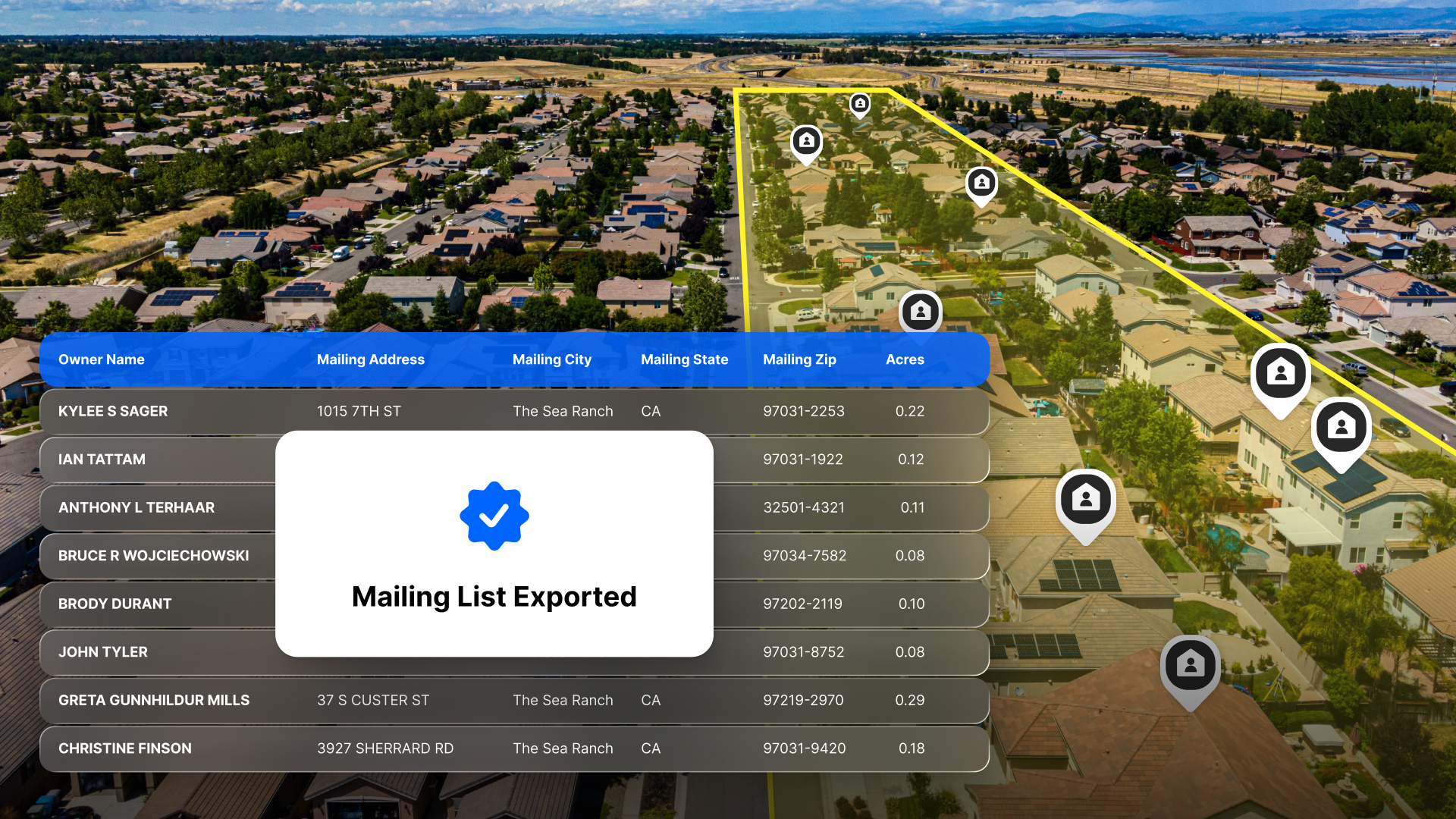
A real estate mailing list is a list of property owners in a defined area, with each owner's name and mailing address. Agents, brokers, and investors use these lists to reach owners who may want to sell, buy, or talk about their property.
Two things trip people up. First, a "real estate agent mailing list" usually means a list of agents, sold to companies that market to agents. To reach property owners, you need an owner list.
Second, an owner's mailing address and property address aren't always the same. Investors, absentee owners, and anyone with a second home get mail somewhere else. A good list uses the mailing address on record, so your letter reaches the owner instead of a tenant or an empty cabin.
Where Real Estate Professionals Get Owner Mailing Lists
There are three common sources. Each one works, but they differ in how precisely you can target.
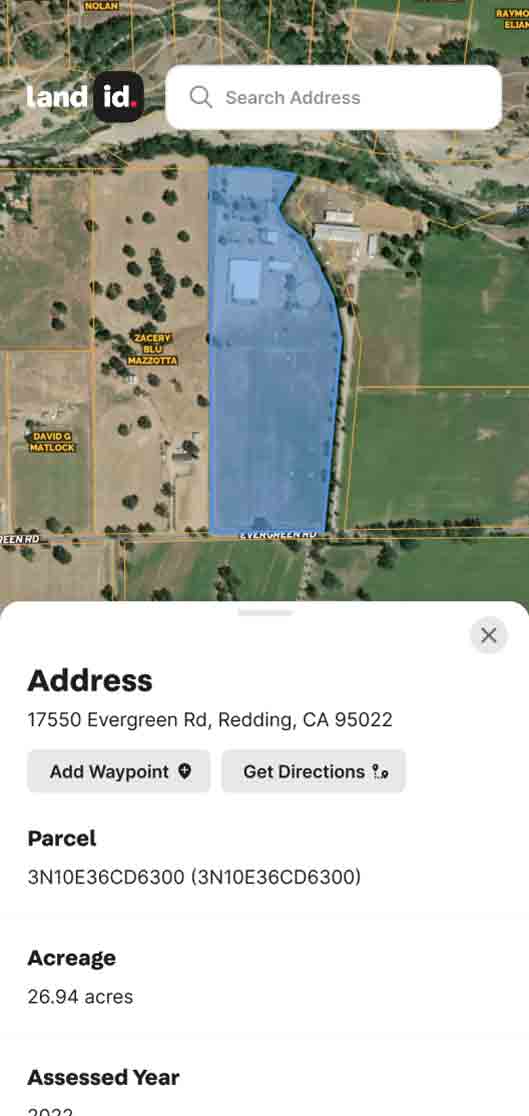
If you only need a few owner names, the county website is free and fine. When the list too big to look up individually, or you need it to follow a specific criteria like a road, river, or neighborhood boundary, a custom parcel map is faster and more precise.
How to Build a Mailing List for Real Estate in Land id
You can go from a blank map to an exported list in Land id in a few minutes. Mailing lists are built in the desktop version of Land id, so do this part at your computer. Read more in our Help Center.
- Choose your area. Draw a custom shape around a neighborhood, set a radius from a point such as your listing, or draw a line along a road to pick up every parcel it crosses.
- Add filters. Narrow the list by acreage, last sale date, assessed value, or land use (single family, vacant land, or agricultural). Skip filters if you want every owner in the area.
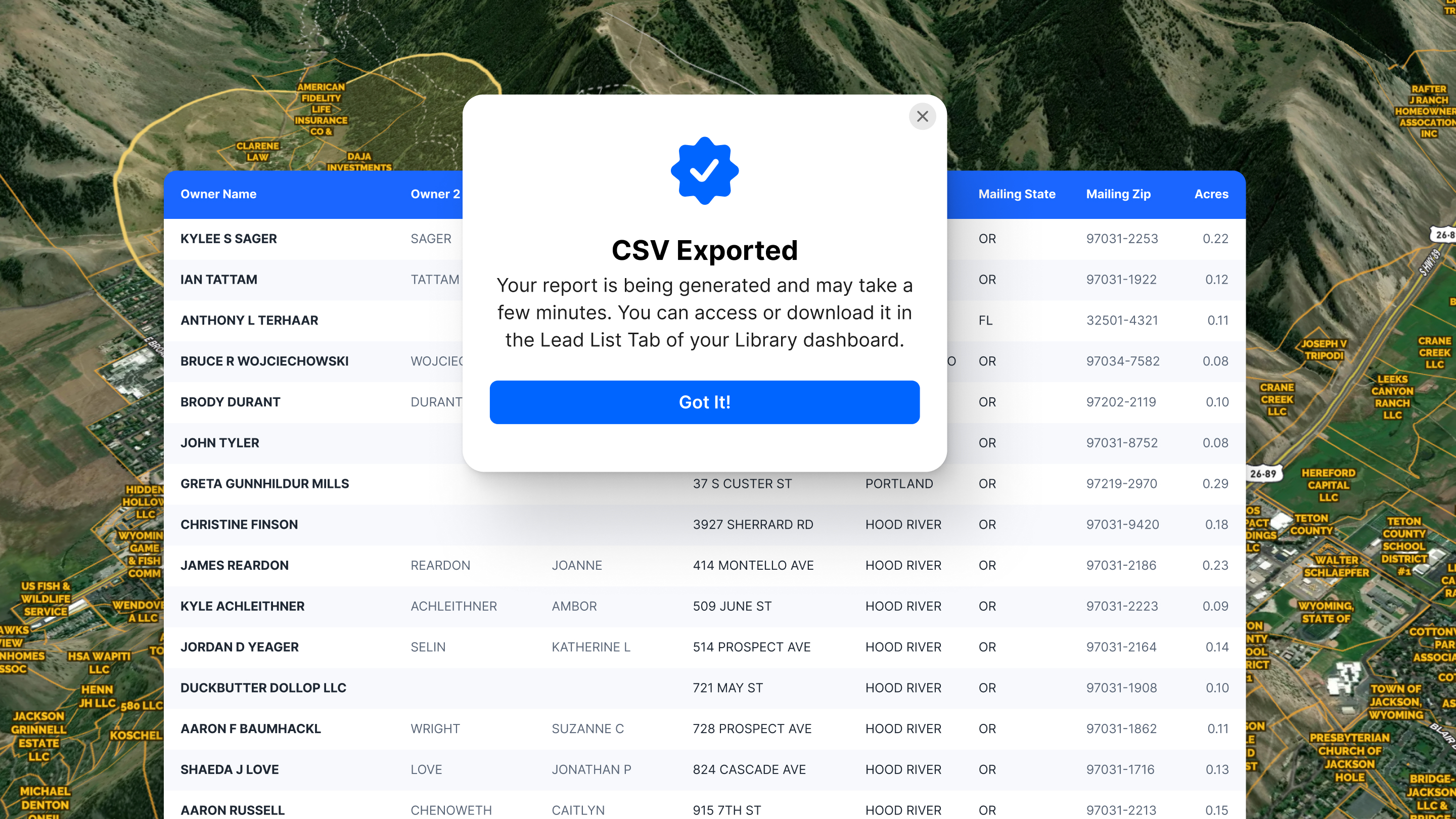
- Pick a list type. A By Owner list gives you one row per owner, with total acreage summed across their parcels. A By Parcel list gives you one row per parcel, with the parcel address, APN, and last sale date.
- Check the count and price. You'll see how many records the list has and what it costs before you export.
- Export and send. Download the spreadsheet and send it to your printer or mail vendor, or import it into your CRM. Lists expire after 30 days, so build yours close to your mail date.
Want a more detailed walk-through? Our Help Center covers each step.
Build a Real Estate Mailing List Quickly: 4 Starting Points
The steps stay the same no matter what you sell. What changes is where you draw and how you filter. Here are four lists real estate pros build often.
Residential: The Blocks Around a New Listing
Set a half-mile radius around your listing and filter for single-family homes. Your "just listed" letter now goes to the neighbors who can see the sign, and every one of them owns a home on the same streets as your listing. When it sells, pull the same area again for "just sold."
Land & Ranch: Every Tract Within a 10-Mile Radius
Draw a line down a county road and filter for parcels over 40 acres, or for agricultural land. A By Owner list sums acreage across each owner's parcels, so the rancher with five adjoining tracts shows up once, with total acreage listed. That's the number you'd want to know before you call.
Commercial & Development: Vacant Land Near Growth
Draw a shape around the area near a new road, school, or utility extension and filter for vacant land. Use a By Parcel list so you get the APN for each tract, which makes follow-up research with the county faster.
Any Market: Long-Term Owners
Filter by last sale date to find owners who haven't sold in 15 or 20 years. Long ownership doesn't mean someone wants to sell, but these owners often have the most equity and may not know what their property is worth today.
Need something the standard filters don't cover, like out-of-state owners only or parcels within a set distance of a road? Request a Custom list. Get details in our Help Center.
Keep Your List Clean
A clean list costs less and gets a better response. A few habits help:
- Remove recent buyers. Use the sale date filter to drop anyone who bought in the last year. They're the least likely to sell.
- Mail once per owner. Use a By Owner list for mailings, so owners with several parcels don't get duplicates.
- Pull a fresh list each round. Ownership changes, and Land id lists expire after 30 days. A new pull catches new owners and drops old ones.
- Spot-check before you pay. Parcel data comes from county records, which can lag behind recent sales. Look over a few dozen rows before you send.
If you're targeting owners who don't live at the property, our guide to absentee owner lists covers those lists in depth. For more ways to find sellers, see finding seller leads.
Start With the Area You Know Best
You already know which streets, roads, and neighborhoods you want to work. A mailing list should follow those lines instead of a generic zip code. Draw the area, filter for the owners who fit, and you'll have a truly custom, precision prospecting list ready for your printer the same afternoon.
Try Land id free for 7 days and build your first list. Learn more about real estate mailing lists in Land id.