You found the parcel. You know who owns it—but you have no way to reach them.
That's where plenty of good leads stall. The property checks out and the owner is identified, but the next step means a second tool and a separate search.
Cold outreach to property owners still works. A call to the right owner at the right time can start a deal that never reaches the market, whether you're a land agent looking for listings, a residential or commercial broker building a pipeline, an investor, or an acquisition team assembling sites.
This guide walks through the full sequence, from choosing parcels to following up, to increase your chances of success.
Step 1: Research Parcels Worth the Call
Your call list is only as good as the parcels on it, so decide what you're looking for before you think about phone numbers. Write down the acreage range, the counties, the access you need, and how the property fits the deal.
What that looks like depends on your work:
- A land agent might target 40- to 200-acre tracts across two counties, looking for owners who may be thinking about selling.
- An investor might look for vacant lots along a corridor where new construction is moving.
- A commercial broker or developer might map the neighboring parcels that would make up an assemblage.
- A residential agent might work a landmark of interest or a single neighborhood, street by street.
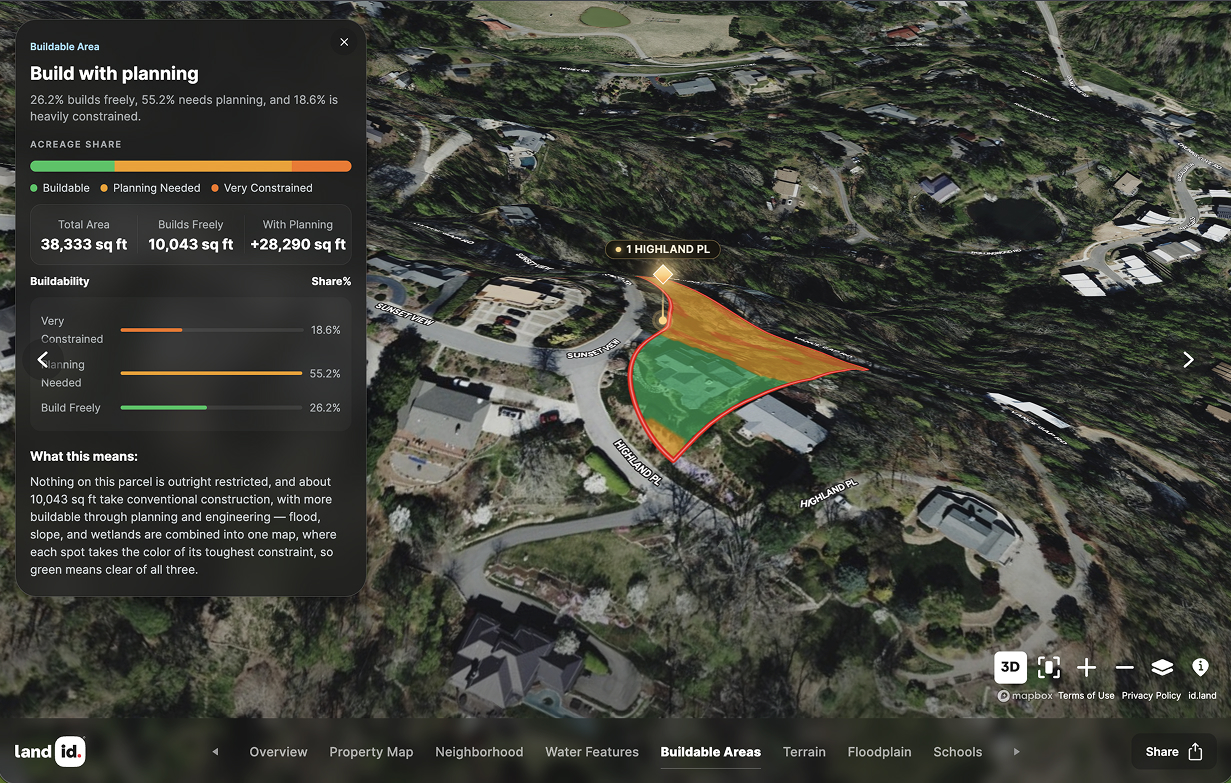
Open each parcel of interest in Land id and check the boundaries, road access, and what surrounds it. Pull The Land id for AI insights and an easy-to-understand narrative of what the data means.
A few minutes of parcel research up front avoids the awkward call where an owner asks a question about their own property and you can't answer it.
Step 2: Know the Owner Before You Dial
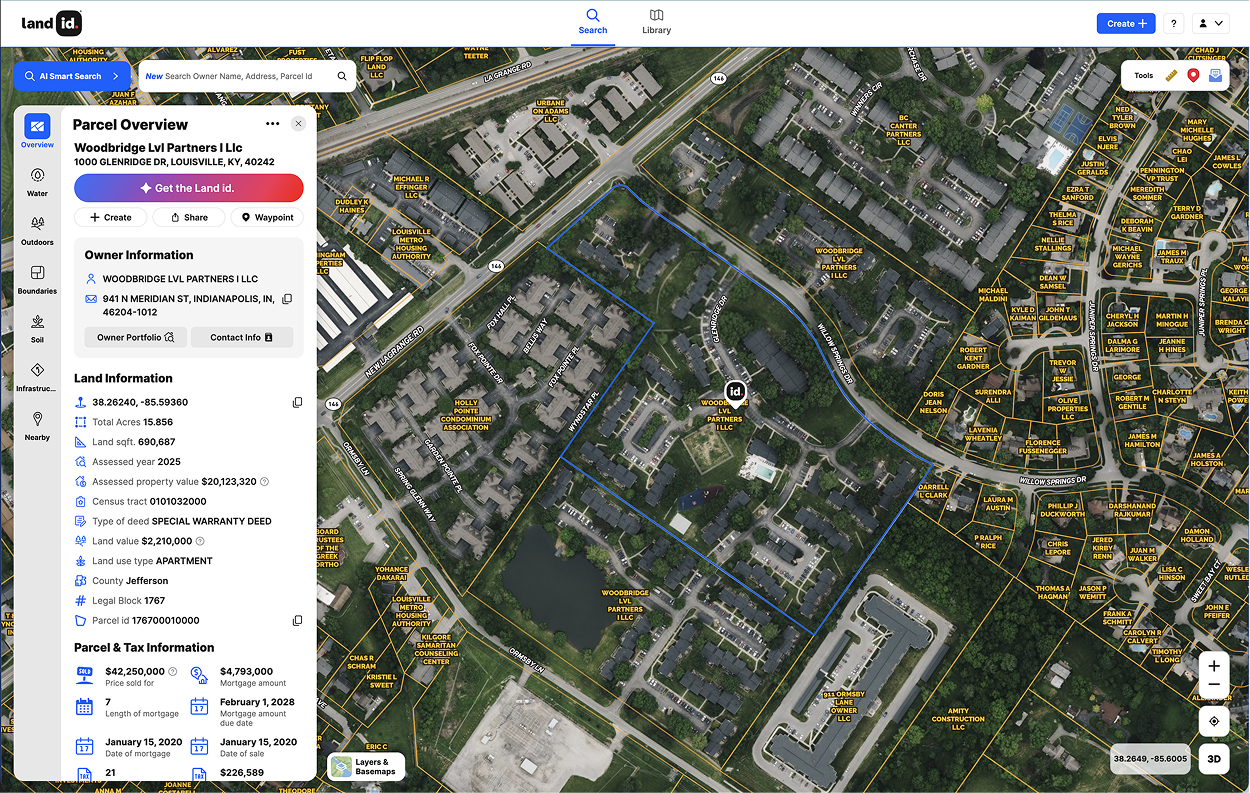
Who you're calling shapes how you call, so look at the owner record before you reach for a phone number.
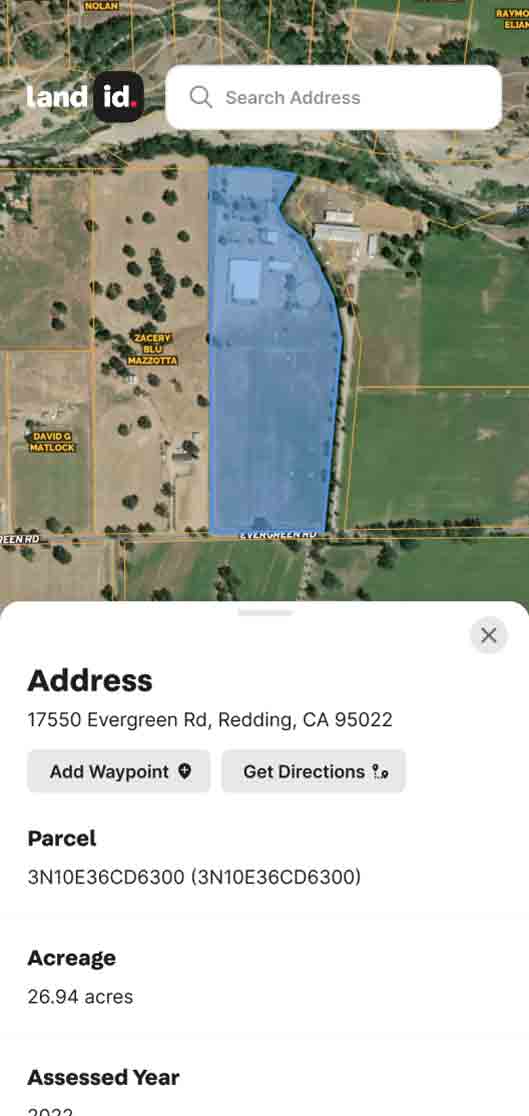
Start with the basics: Is the owner an individual, a family trust, or an LLC? In Land id, this is a quick click on the data-rich parcel card.
The difference matters. A family that inherited 80 acres and an LLC holding 12 parcels in the same county are two different conversations. The first may be weighing what to do with land they never planned to own. The second is probably making decisions about a portfolio.
Land id’s owner portfolio can show you what else an owner holds, which helps you spot someone with several properties and tailor your opening to the whole picture instead of one parcel.
Keep in mind that existing parcel and owner redactions still apply, so some parcels won't show owner details.
Step 3: Get a Phone Number From the Parcel Card
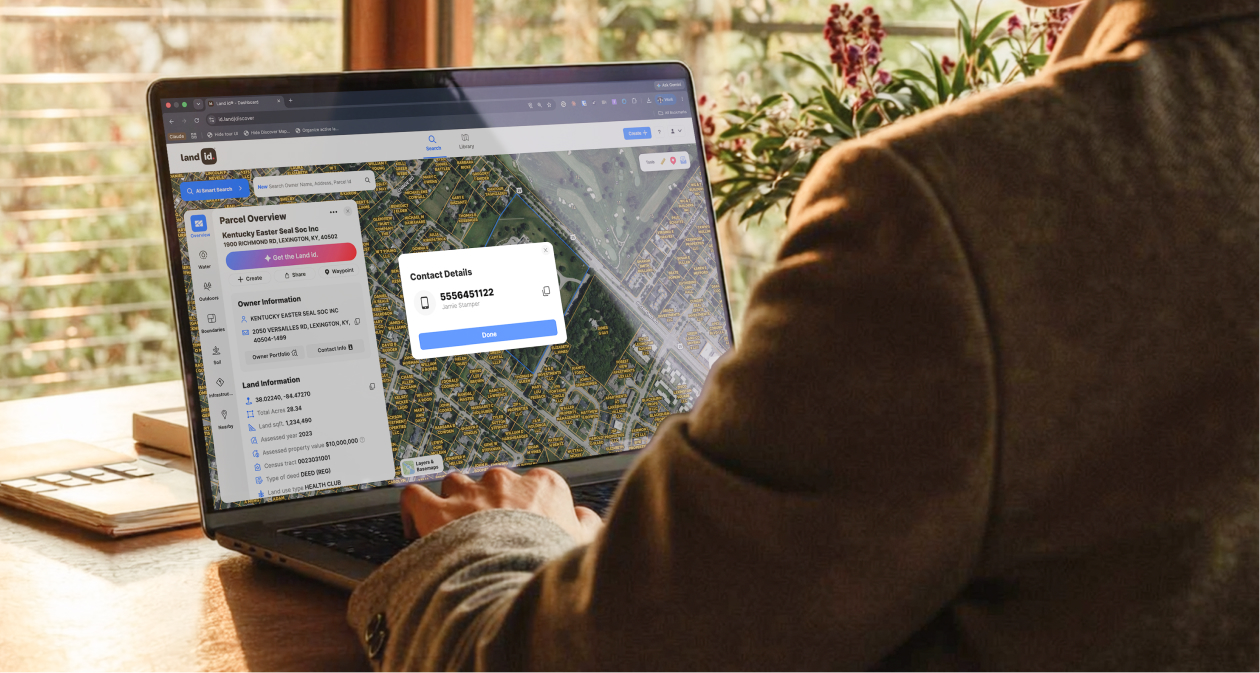
Contact information lets you instantly access an available phone number for a property owner without leaving the parcel you're already researching in Land id.
Open a parcel card, select Contact Information, and Land id displays a phone number if one is available. It works on web, iOS, and Android, so you can run the lookup at your desk or on your phone after you've driven by or walked a tract in person.
A few things to know before you use it:
- Contact information is a paid, Pro-only feature. If you’re on a trial, Basic, or Premium plan, you’ll need to upgrade to access phone numbers. It’s not available to trial users on any tier.
- Not every lookup returns a number. Land id applies privacy, redaction, and suppression checks, including Do Not Call filtering, before showing anything. Some owners won't have an available number, and some results are filtered out.
- It covers phone numbers, one parcel at a time. There is no bulk lookup at this time.
For details and a step-by-step walkthrough, see the Contact Information article in the Help Center.
Step 4: Prepare Your Opening
Plan your first 20 seconds before you dial, not while the phone is ringing. A good opening answers three questions the owner is likely going to ask: who is this, why are you calling me, and what do you want.
However you structure your introduction, ask permission to continue, and be ready to end the call politely if the answer is no.
Try this: For a simple script template where you can swap in your own details, download our free cold outreach playbook. It’s available at the end of this article.
Step 5: Make the Call & Handle Objections
Most cold outreach calls are decided in the first 20 seconds. Call at a reasonable hour in the owner's time zone, give your name and reason right away, and then listen more than you talk.
Many owners won’t answer. Some will say no. Some will say "not yet," and a few will ask what the property is worth. Jot down how you plan to handle objections, or download our free playbook (scroll to the end of this article) for quick-reference templates that cover the most common conversations.
Step 6: Follow Up on What the Owner Told You
The follow-up should match the conversation, so log each call while it's fresh. Record the date, the outcome, what the owner said about the property, and the next step. Keeping those notes with the parcel means you won't have to remember which owner mentioned a pending estate settlement and which one said to check back in the spring.
Then act on what you learned:
- Open to talking: Send something tangible, like a link to the parcel’s Land id with AI Insights, a virtual property tour, a comparable sales report, a short letter or a mailer, or set a specific time to call back.
- "Not right now": Put a reminder on your calendar for the timeframe they gave you and reach out once then.
- "Not interested": Take them off your list.
- Pro tip: Land id's owner mailing lists can help if you're doing direct-mail outreach to multiple owners in the same area.
Call Responsibly
Phone outreach comes with rules, both explicit and implied, and following them is part of doing this work well.
Contact information is offered for professional use, like prospecting and owner outreach about a property you have a real interest in.
A few practices keep your outreach respectful:
- Know which rules apply to you. Federal and state Do Not Call rules, the Telephone Consumer Protection Act (TCPA), and state limits on calling hours and telemarketing can all affect how you contact an owner. Your brokerage's compliance team or an attorney can tell you what applies to your situation.
- Say who you are. Give your name and reason for calling at the start of every call. Not every pro mentions their company at the start; you can experiment with including it or not.
- Honor requests to stop. If an owner asks you not to contact them again, stop, and keep your own do-not-contact list so it stays that way.
- Treat each number as one owner's information. Use it for the outreach you described, not for anything else.
- Space your attempts over weeks, not days. Two or three well-timed contacts show you're serious. A daily call tells the owner you aren't listening.
- Say only what's true. If you don't have a buyer or investors, don't imply you do.
Land id applies eligibility, redaction, suppression, and filtering checks before displaying contact information. Those checks are not legal clearance to call. You remain responsible for making sure your use of contact information complies with applicable laws and regulations.
Find the Property. Find the Owner. Make the Connection.
The work that wins a landowner's trust happens before the call: choosing the right parcel, understanding who owns it, and knowing what you want to ask. Contact information puts the last piece of that research in the same place as the rest of your prospecting workflow.
If you're on a paid Pro or Pro Unlimited plan (not a trial), open a parcel of interest and select Contact Information to try it. The Help Center article walks through the details.
If you're on another Land id plan and want to see what Pro includes, compare plans and pricing.
Download the Free Cold Outreach Playbook
The full cold outreach playbook includes a script pack and an objection-handling card for quick reference. Add your email to get your download link today—no account required.